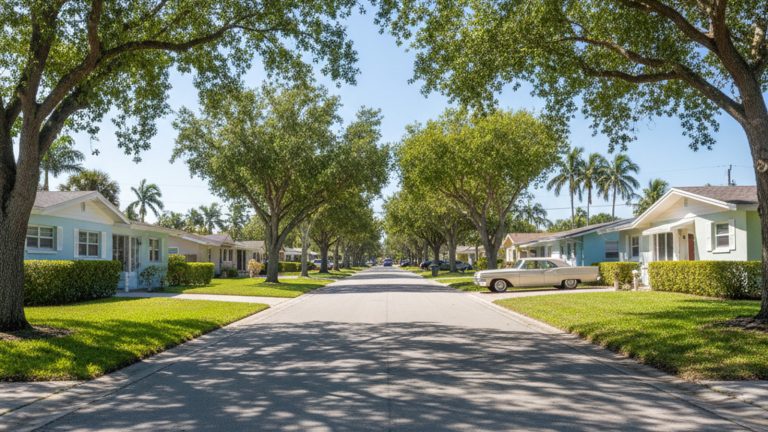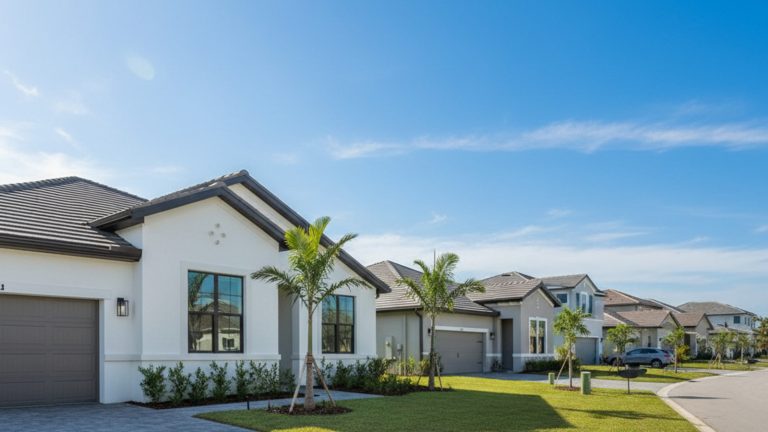
If you are thinking about living in Tamarac, one of the first things you’ll notice is just how centrally located it is. Sitting right between the Sawgrass Expressway and Florida’s Turnpike, this city was built for connectivity. Whether you are heading east to the beaches or south to Miami, you have options. However, like most of South Florida, Tamarac is definitely a car-dependent suburb. Most residents rely on their own vehicles to get groceries or head to work.
That said, the landscape is shifting slightly in 2026. While the car is still king here, there are surprisingly robust options for those who prefer not to drive, from free local shuttles to county-wide transit. We are also in the middle of a big tech update for public transit users, with the transition from the old RideBCT app to the new “SoFloGO” platform happening right now in early 2026. Here is the reality of what it looks like to navigate the city day-to-day.
Driving in Tamarac: Major Roads and Traffic Patterns
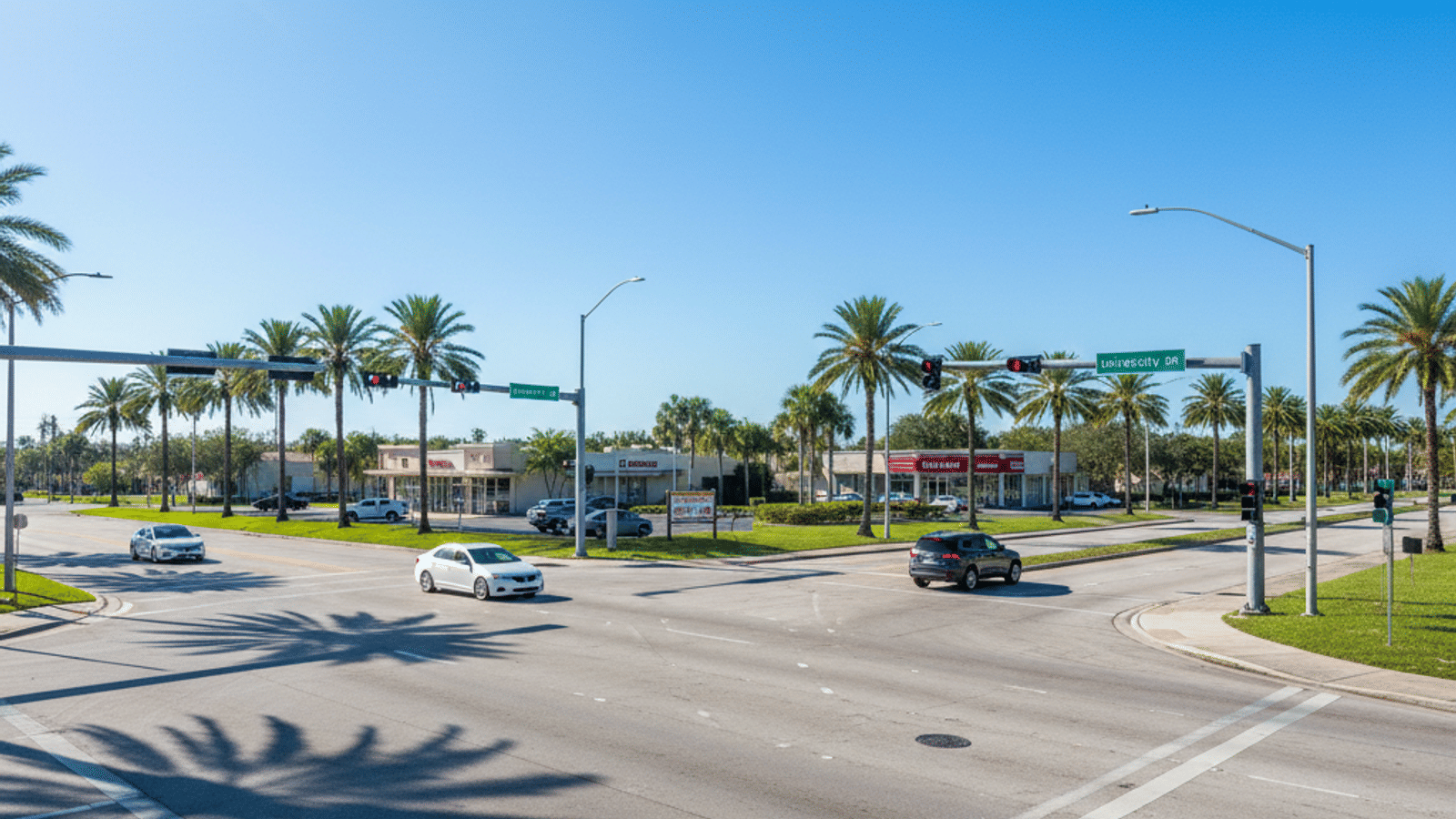
When you look at a map, Tamarac is a grid. This makes navigation incredibly straightforward, but it also funnels traffic onto a few massive arteries. The main east-west corridor is Commercial Boulevard. If you are commuting, you need to make peace with Commercial Boulevard. It is wide, fast, and prone to heavy congestion, especially where it intersects with the Turnpike. For a slightly calmer east-west alternative, locals often stick to McNab Road, which feels more like a neighborhood connector than a highway.
For north-south travel, University Drive, Pine Island Road, and Rock Island Road are your backbones. The intersection of Commercial Boulevard and University Drive is arguably the busiest spot in town; try to avoid it if you are in a rush during peak hours. Speaking of rush hour, the typical windows here are standard for Broward County: heavy volume from 7:00 AM to 9:00 AM and again from 4:00 PM to 7:00 PM.
One thing new buyers should keep in mind is the seasonal shift. During the winter months, when our seasonal residents (snowbirds) return, traffic density increases noticeably. You simply have to budget an extra 10 to 15 minutes for any trip between January and April. Also, watch out for school zones along University Drive—they are strictly enforced and can slow your morning commute to a crawl.
Parking Availability and Rules
If you are moving here from Miami or a crowded beach town, you will find the parking situation in Tamarac to be a breath of fresh air. In almost every shopping plaza, grocery store, or medical center, parking is ample and free. You rarely have to circle the lot looking for a spot.
Residential parking is a bit more structured. Many of the neighborhoods in Tamarac are governed by HOAs or Condo Associations, particularly in large communities like Kings Point. In these areas, you will usually have one or two assigned spots. This is a great perk because you never have to fight for space in front of your home, but it does mean you need to be mindful of guest rules.
Gated communities can be strict about where visitors park, often requiring them to use designated “Guest” slots that might be a short walk from your front door. In single-family neighborhoods without gates, you still need to be careful about street parking. Tamarac prohibits parking on the swale (the grass strip between the sidewalk and road) in many areas, and overnight street parking restrictions are common in HOA bylaws.
Public Transportation Options
For those looking to save on gas or reduce their carbon footprint, Broward County Transit (BCT) operates several fixed routes that crisscross the city. The most relevant ones for residents are Route 2, which runs up and down University Drive, and Route 55, which services Commercial Boulevard. There is also Route 62 along McNab Road. These buses are reliable connectors if you need to transfer to regional hubs, like downtown Fort Lauderdale or the Brightline station for a high-speed trip to Miami or Orlando.
If you are planning to ride the bus, you should know that the payment system is getting an overhaul. As of February 2026, the county is retiring the old “MyRide Broward” app and moving everything to the SoFloGO app. This new system allows for seamless mobile ticketing and trip planning. The standard fare is generally around $2.00 per trip, but it’s always smart to check the app for the latest rates and pass options.
The Tamarac Community Shuttle
Distinct from the county bus system, the city operates its own localized service known as the Tamarac Community Shuttle. The best part? It is completely free for both residents and visitors. If you just need to run errands locally—like getting to the pharmacy, the library, or the grocery store—this is a fantastic resource that saves you from fighting traffic.
The service is divided primarily into the Red Route and the Red Extension.
- The Red Route: Runs Monday through Friday, roughly 7:00 AM to 7:00 PM. It hits major stops like the Tamarac Community Center, various shopping plazas, and medical facilities.
- The Red Extension: This has more limited hours, typically operating on Tuesdays and Thursdays.
The shuttles run approximately every 60 minutes. They aren’t designed for a rushed commute, but they are perfect for a relaxed schedule. The vehicles are accessible, featuring wheelchair lifts and bike racks that can hold two bicycles, making it easy to combine a ride with a little exercise.
Transportation Services for Seniors and ADA Needs
Tamarac has a large population of retirees and active adults, so the transportation infrastructure is designed with seniors in mind. If you are looking at Kings Point, you might not even need the public bus. That community operates its own private internal transit system to shuttle residents between the clubhouses and nearby shopping centers.
For residents with disabilities or those who cannot use the fixed-route bus system, Broward County offers TOPS (Paratransit). This is a door-to-door shared-ride service. You do need to apply and be found eligible to use it, but it’s a lifeline for many needing reliable transport to doctors’ appointments. Additionally, seniors aged 65 and older are eligible for discounted bus passes through BCT, making the overall cost of living in Tamarac even more manageable for retirees on a fixed income.
Walking and Biking in Tamarac
Is Tamarac walkable? The honest answer is: it depends on where you are trying to go. The city has a Walk Score of around 63, which means it is “somewhat walkable.” You can certainly walk your dog or take a jog through your neighborhood, as sidewalks are standard in most residential areas. However, walking to run errands is tough because commercial plazas are spread out and separated by wide, high-speed boulevards.
Biking is a popular recreational activity here. The city has a Bike Score of about 66. You will find dedicated bike lanes on major roads like Nob Hill Road and Pine Island Road. However, safety is key. Roads like Commercial Boulevard are very busy, and I generally advise cyclists to stick to the designated lanes or, better yet, the recreational trails in places like Caporella Park. Greenways and park paths offer a much more relaxing ride than trying to share the road with rush-hour traffic.
Commuting Beyond City Limits
Many people choose to live here because it offers more house for the money compared to the coast, but they still work in the bigger employment hubs. If your office is in downtown Fort Lauderdale, expect a commute of about 25 to 35 minutes via Commercial Boulevard or Oakland Park Boulevard, depending on traffic.
Commuting to Miami is a heavier lift. You are looking at 45 to 60 minutes each way, and potentially more if there is an accident on I-95 or the Turnpike. For frequent flyers, getting to the airport is relatively painless. Fort Lauderdale-Hollywood International Airport (FLL) is a straight shot down the highway, usually taking less than 30 minutes. Ride-sharing services like Uber and Lyft are widely available here, so you rarely have to wait long for a ride to the terminal.
Frequently Asked Questions
It depends on which service you use. The Tamarac Community Shuttle (the Red Route) is completely free for everyone. However, the Broward County Transit (BCT) buses that run on major roads like University Drive typically charge a fare of around $2.00 per ride.
Generally, no. The main Red Route operates Monday through Friday from 7:00 AM to 7:00 PM. If you need to get around on Saturday or Sunday without a car, you will likely need to rely on the county bus system or ride-sharing apps.
For the county buses (BCT), cash is accepted, but the most convenient method is mobile ticketing. As of February 2026, riders should download the “SoFloGO” app, which has replaced the old MyRide Broward system, to purchase passes and pay fares directly from their phone.
Tamarac is not considered highly walkable for daily errands compared to urban centers. While residential neighborhoods have sidewalks that are great for exercise, the distances between homes and shopping centers usually require a car, bike, or bus ride.
Driving or taking a ride-share (Uber/Lyft) is the fastest option, taking about 25 to 30 minutes via I-95 or the Turnpike. You can also take the BCT bus to downtown Fort Lauderdale and transfer to an airport connector, but this will take significantly longer.