If you’ve ever looked up your home’s value on three different real estate websites and received three widely different numbers, you aren’t alone. For homeowners in Tamarac, this confusion is almost guaranteed. Between the high density of 55+ communities, varying HOA structures, and the unique layout of our neighborhoods, automated online estimates often struggle to pin down an accurate number.
But the confusion usually runs deeper than just “what can I sell it for?” There is often a significant gap between what a buyer will pay for your home and what the county says it’s worth for tax purposes. Understanding this difference is critical whether you are planning to sell, looking to refinance, or just trying to make sense of your annual tax bill.
Let’s break down the numbers and look at what actually drives property value in our local market.
Market Value vs. Assessed Value: What’s the Difference?
The most common question homeowners ask is, “Why is my tax assessment so much lower than my Zillow estimate?” or conversely, “Why did my taxes go up if the market is cooling?” To answer this, we have to separate “value” into two distinct buckets: what the market thinks and what the government thinks.
Market Value is the price a willing buyer pays a willing seller today. It fluctuates constantly based on interest rates, inventory, and the condition of your home.
Assessed Value, on the other hand, is a figure calculated by the Broward County Property Appraiser (BCPA) specifically for generating your tax bill. For many long-term Tamarac residents, this number is significantly lower than the market value because of protections like the “Save Our Homes” cap, which limits how much your assessed value can rise each year.
There is also a third term you’ll see on official documents: Just Value. This is the Property Appraiser’s estimate of your home’s market value, but it is retrospective—meaning it looks back at sales from the previous year.
Here is a quick way to compare them:
FeatureMarket ValueAssessed ValueJust ValueWho decides it?Buyers and SellersBroward County Property AppraiserBroward County Property AppraiserWhat determines it?Supply, demand, condition, locationJust Value minus exemptions & capsSales data from the previous yearWhy it matters?Determines your cash in pocket when sellingDetermines your annual property tax billThe starting point for tax calculations
If you are thinking about selling your home in Tamarac, do not rely on your tax bill to set your list price. In a healthy market, your sale price should generally be higher than your tax assessment.
5 Key Factors Influencing Home Values in Tamarac
While the general rules of real estate apply everywhere, Tamarac has specific nuances that automated algorithms often miss. A computer can’t always tell the difference between a condo in Kings Point and a single-family home in the Woodlands, but a local buyer certainly can.
Here are the five biggest drivers of local value right now:
1. Property Type & 55+ Restrictions
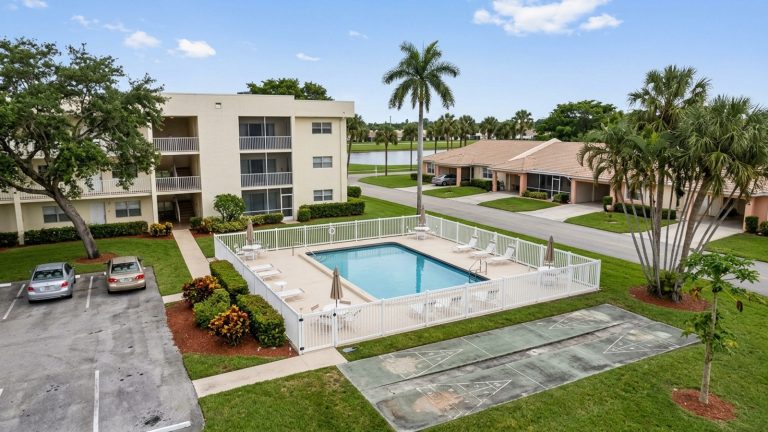
Tamarac has a high concentration of age-restricted communities. If your home is in a 55+ community like Kings Point or Mainlands, your pool of potential buyers is smaller than it would be for an all-ages property. Because the buyer pool is restricted by age, these homes typically command a lower price per square foot compared to non-restricted homes. It’s not a flaw; it’s just supply and demand.
2. HOA & Condo Maintenance Fees
This is huge in our current market. Buyers are payment-focused. If a condo or HOA fee is $600 or $800 a month, that reduces the amount of mortgage a buyer can afford. Consequently, two identical homes can have very different values if one has significantly higher monthly fees. Furthermore, with recent state laws requiring stricter reserve funding for condos, older buildings with underfunded reserves are seeing values dip as dues skyrocket.
3. Flood Zones & Insurance
Insurance costs are a major part of the monthly budget for Florida buyers. Homes located in Flood Zone X (minimal risk) are increasingly more valuable than those in Zones AH or AE (high risk), simply because the latter require expensive flood insurance policies. When we value a home, we have to look at the “total cost of ownership,” not just the sticker price.
4. Renovation Status
Much of Tamarac’s housing inventory was built in the 1970s and 1980s. There is currently a wide value gap between “original condition” homes and “fully updated” ones. In newer cities, the gap might be narrow, but here, a home with the original popcorn ceilings and mica cabinets will sell for significantly less than a neighbor’s home that has impact windows and a modern kitchen.
5. Market Trends
Finally, we have to look at the broader economic picture. As of late 2025 and heading into 2026, we are seeing a cooling trend in some segments. Inventory is sitting a little longer, and buyers have more leverage than they did two years ago.
Using the Broward County Property Appraiser (Marty Kiar) Website
For tax matters, your best friend is the Broward County Property Appraiser’s website (bcpa.net). It is one of the most robust public record sites in the country, but it can be overwhelming if you don’t know what to look for.
To check your status, you can search by your address or owner name. Once you pull up your Property Record Card, look for the “Values” section. You will see columns for “Just Value” (the county’s market estimate) and “Assessed/SOH Value” (what you are taxed on).
Watch for the TRIM Notice
Every year around mid-August, Marty Kiar’s office mails out the TRIM Notice (Notice of Proposed Taxes). Do not throw this away. It is not a bill; it is your warning. It tells you what the county thinks your home is worth and what your taxes will likely be.
If you believe the Just Value on that notice is higher than what you could actually sell your home for, you have a limited window to contest it. You generally have until mid-September (25 days after mailing) to file a petition with the Value Adjustment Board (VAB). Once that deadline passes, it is very difficult to challenge your tax assessment for that year.
How to Get an Accurate Valuation: Appraisal vs. CMA
If you need to know what your home is worth today, you have three main options. Choosing the right one depends on your goals.
1. Automated Valuation Models (AVMs) These are the estimates you see on Zillow, Redfin, or Realtor.com. They are fun for a quick check, but in Tamarac, they are often inaccurate. They struggle to account for the specific view from your patio, the condition of your roof, or the specific financial health of your condo association.
2. Professional Appraisal If you are refinancing or getting a home equity line of credit, the bank will require this. You hire a licensed appraiser who provides an unbiased, objective opinion of value based on strict guidelines. This costs money—typically out of pocket for the homeowner.
3. Comparative Market Analysis (CMA) If you are thinking of selling, this is the best tool. A real estate agent creates a CMA by analyzing active competition (who you are fighting against) and recent sales (what buyers actually paid). Unlike an appraisal, which looks backward, a CMA looks forward to help you set a strategic list price that accounts for current marketing conditions.
Frequently Asked Questions About Property Valuation
How much does a property appraisal cost in Tamarac, FL?
For a standard single-family home or condo in Broward County, a professional appraisal typically costs between $475 and $650. The price can be higher for larger estates, multi-family properties, or rush orders.
Is market value usually higher than assessed value?
Yes, especially for homeowners who have owned their property for several years. Thanks to “Save Our Homes” and other exemptions, the assessed value (taxable value) is often capped significantly lower than the price a buyer would pay on the open market.
How do I find the assessed value of my property in Broward County?
You can find this publicly on the Broward County Property Appraiser’s website (bcpa.net). Search for your property address and view the most recent tax year columns on the Property Record Card.
Do HOA fees affect my home’s appraisal value?
Yes, indirectly. While an appraiser doesn’t deduct value dollar-for-dollar based on fees, high HOA costs lower the affordability of the home. This often results in lower sale prices for high-fee units compared to similar homes with lower monthly maintenance costs.