If you are thinking about selling your home in Tamarac this year, you have probably noticed that the conversation has changed. The days of putting a “Coming Soon” sign in the yard and waking up to ten offers over asking price are behind us. As we move through 2026, the market has shifted, and understanding that shift is the key to walking away with a good check at closing.
We are currently seeing a transition from a frenzied seller’s market to a much more balanced—and in some sectors, a buyer’s—market. Inventory is rising across Broward County, and price growth has cooled significantly. For sellers in zip codes like 33321 and 33319, this means “aspirational pricing”—or testing the market with a high number just to see what happens—is a risky move.
The data tells the story clearly. The median days on market (DOM) has crept up to over 90 days. That means homes are sitting longer, and buyers are taking their time. Depending on your specific neighborhood, we are seeing year-over-year price corrections ranging from roughly -8% to -20%. But don’t panic—homes are still selling. They just require a smarter strategy than they did three years ago.
The Tale of Two Cities: Single-Family Homes vs. 55+ Condos
One of the most important things to understand about Tamarac is that it is not one single, uniform real estate market. It is really two very different markets operating side-by-side. The strategy that works for a detached house with a two-car garage will not work for a condo in a Housing for Older Persons community.
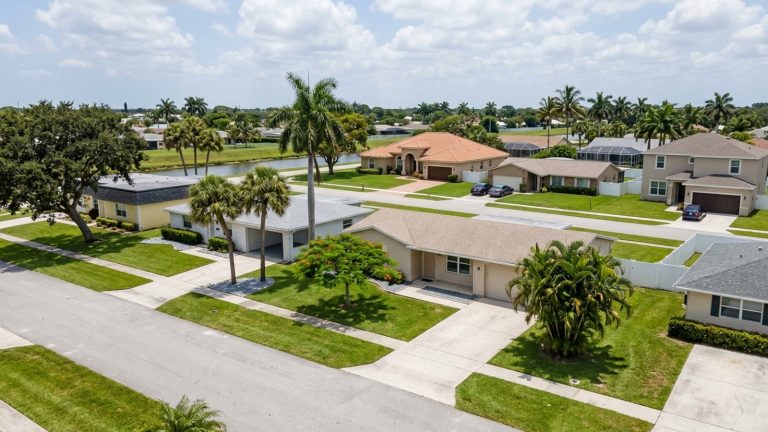
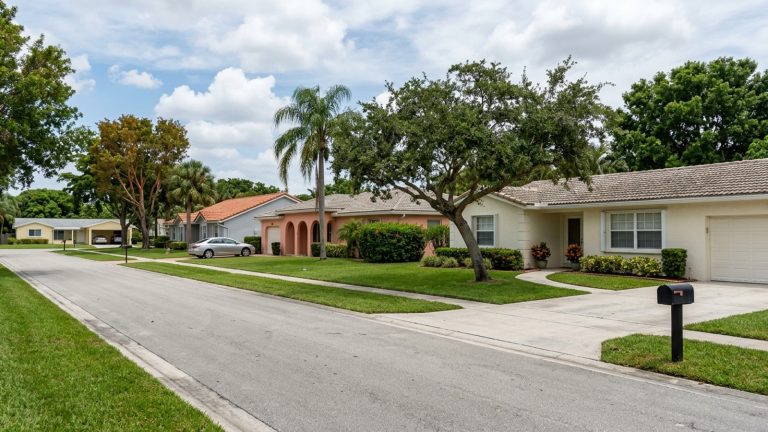
Single-Family Homes (e.g., The Woodlands, Heathgate) In neighborhoods like The Woodlands or Heathgate, inventory is still relatively tight compared to the condo market. While you cannot be reckless with your asking price, you have a little more leverage here. Buyers looking for single-family homes in Tamarac have fewer options, so pricing can be slightly more aggressive, provided the home will still appraise.
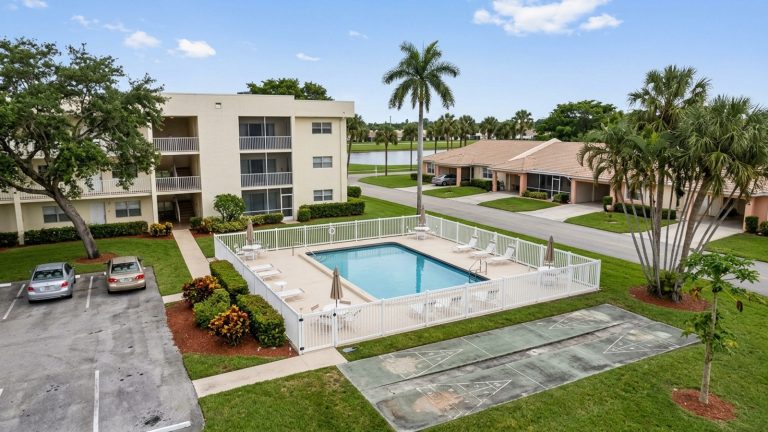
55+ Condos (e.g., Lime Bay, Bermuda Club) This is where we see a major difference. In communities like Lime Bay or Bermuda Club, inventory is currently high. There is an abundance of supply, meaning buyers have dozens of units to choose from. In this sector, your pricing is heavily dictated by your competition. If there are 20 other active listings in your complex, you cannot price based on what your neighbor got in 2022. You have to price based on how you compare to the 19 other units for sale right now.
The “HOA Drag”: How Monthly Fees Dictate List Price
If you take only one thing away from this article, let it be this: in Tamarac, your Homeowner Association (HOA) fee is the single biggest factor influencing your list price.
Buyers today are payment-shoppers, not just price-shoppers. They are looking at their total monthly budget. When they see a condo with a high HOA fee—which is becoming common in older Tamarac buildings due to rising insurance costs and reserve requirements—they calculate that into their mortgage power.
Think of it from the buyer’s perspective. A $150,000 condo with an $800/month HOA fee might cost them the exact same amount per month as a $220,000 home with no HOA. The higher your monthly fees, the lower your asking price needs to be to remain competitive.
To combat this, you have to be proactive. Don’t just show the fee; show the value. Does that $700/month cover the roof, water, cable TV, and internet? If so, we need to spell that out clearly. You have to justify the fee to justify the home’s price.
Selecting the Right Comparables (Comps)
When you sit down to determine market value, you need to look at “comps”—comparable properties that have recently sold. However, in a fragmented market like ours, picking the wrong comps can lead to disaster.
Geography Matters In Tamarac, a true comp must be in the same subdivision or building. You cannot compare a unit in Kings Point to a unit across the street in a different complex. The amenity packages, reserves, and community reputation are too different.
Renovation Status Be honest about the condition of your home. An “original condition” unit from the 1980s cannot be priced near a “fully remodeled” unit just because they share the same square footage. Buyers in 2026 are paying a premium for move-in ready homes because renovation costs are high.
Model Match This is especially true in communities like the Mainlands of Tamarac Lakes. You should be comparing your home specifically to the same model. Comparing a “Monaco” model to a “Seville” model can skew the numbers because the layouts appeal to different buyers.
Psychological Pricing and Search Filters
Once we know the value range, we have to pick the specific number that goes on the listing. This is where art meets science.
The “99” Strategy There is a reason you see prices like $399,900 rather than $405,000. It isn’t just about making it look cheaper; it is about search filters. If a buyer sets their search limit to “Under $400,000” on a real estate app, the home priced at $405,000 disappears completely. By staying just under that threshold, you ensure your home is seen by the maximum number of people.
Bridge Pricing Sometimes, setting a price at a round number like exactly $400,000 can help you appear in two searches: the “$300k–$400k” bracket and the “$400k–$500k” bracket. However, in a cooling buyer’s market, the “just below” strategy is usually more effective at driving traffic.
Whatever you do, avoid “weird” numbers. Pricing a home at $397,555 looks messy and distracts buyers. Stick to clean, logical pricing.
The Danger of Overpricing in a Cooling Market
It is tempting to say, “Let’s list it high and see if we get a bite. We can always lower it later.” In the current 2026 market, this is a dangerous game.
The Stale Listing When a home sits on the market for more than 90 days, it gets stigmatized. Buyers see the “Days on Market” counter and assume something is wrong with the property. They wonder why no one else has wanted it.
Chasing the Market Down If you start too high, you will likely end up chasing the market down. You list high, get no showings, drop the price, still get no showings, and drop it again. Often, sellers who do this end up selling for less than they would have if they had priced it correctly from day one.
Appraisal Gaps Even if you find a buyer willing to pay an inflated price, the bank might not agree. If the appraisal comes in low because the comps don’t support your price, the deal could fall apart, putting you back at square one.
Steps to Determine Your Market Value
So, how do you find the sweet spot? Here is a quick action plan to get you started.
- Get a professional CMA: Do not rely on a “Zestimate” or an online calculator. You need a Comparative Market Analysis from a local expert who knows the difference between the subdivisions.
- Tour your active competition: Pretend you are a buyer. Go see the other condos or homes for sale in your specific neighborhood. If their home is nicer than yours and priced lower, you have a problem.
- Factor in your specific HOA fees: Look at your monthly costs objectively and adjust your list price accordingly.
- Adjust for condition: Be brutally honest about needed repairs. If the AC is 15 years old, that affects the value.
Frequently Asked Questions
How do HOA fees affect my home value in Tamarac?
HOA fees have a direct impact on your home’s value. In Tamarac, high HOA fees lower the potential asking price because they reduce the buyer’s purchasing power. A buyer approved for a $2,000 monthly payment can afford a more expensive home if the HOA fee is low, but significantly less house if the HOA fee is high.
Should I price my home higher to leave room for negotiation?
No, this is a common misconception that hurts sellers in a buyer’s market. Pricing higher to “leave room” usually results in low traffic and fewer showings. It is better to price accurately at market value to drive interest and generate offers, rather than scaring buyers away with an inflated number.
Is Tamarac currently a buyer’s or seller’s market?
As of 2026, Tamarac is shifting toward a buyer’s market. Inventory has increased, and homes are taking longer to sell (often 90+ days). This means buyers have more choices and more negotiating power than they did a few years ago.
How much are closing costs for sellers in Tamarac?
Closing costs for sellers typically include documentary stamps on the deed (currently calculated based on the sale price), real estate commissions, and title search fees. While it varies, you should generally budget for these expenses to understand your net proceeds.